
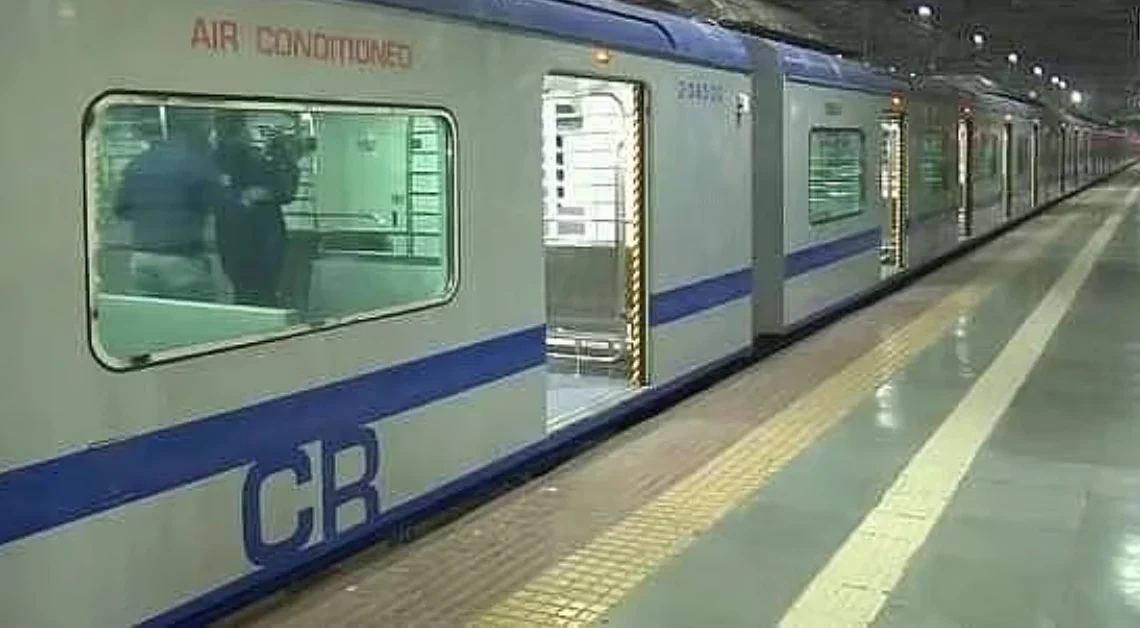
Nearly a month after the launch of air-conditioned local trains on Mumbai’s Harbour Line, daily commuters are experiencing unexpected service disruptions. What was introduced as a comfort-driven upgrade has now become a topic of debate among regular passengers, railway authorities, and urban transport planners. The introduction of AC locals was meant to modernize suburban travel, but operational adjustments and scheduling challenges have led to mixed reactions across the city.
Mumbai’s suburban railway network, operated by Central Railway and Western Railway under the umbrella of Indian Railways, is often referred to as the city’s lifeline. Any change in its schedule or frequency directly affects millions of commuters. The Harbour Line, connecting key nodes such as Chhatrapati Shivaji Maharaj Terminus, Panvel railway station, and Vashi railway station, serves a significant portion of office-goers and industrial workers.
The introduction of AC locals was welcomed initially, but the operational reality has raised questions about balancing comfort with capacity.
The Purpose Behind Introducing AC Locals
The decision to introduce air-conditioned local trains on the Harbour Line was part of a broader modernization effort. Authorities aimed to improve commuter comfort, reduce heat-related stress during peak summers, and attract passengers who might otherwise prefer private vehicles.
Mumbai’s climate, particularly during the summer months, can be exhausting for daily commuters. Crowded compartments combined with high humidity make travel physically draining. AC locals promised a cooler, more comfortable journey. The move also aligned with long-term plans to upgrade suburban infrastructure and bring it closer to metro-level standards.
However, implementation challenges are now evident.
How the Disruptions Are Happening
Nearly a month after launch, several commuters report that regular non-AC services have been rescheduled or reduced to accommodate AC trains. This adjustment has resulted in longer waiting times during peak hours.
The Harbour Line already operates under heavy pressure. Adding AC services without significantly increasing overall track capacity has led to:
Reduced frequency of certain fast and slow locals
Increased platform congestion
Confusion regarding revised timetables
Crowding in remaining non-AC trains
For many daily passengers, timing is critical. Even a delay of 10 to 15 minutes can disrupt office schedules, school timings, and connecting transport arrangements.
Commuter Reactions and Concerns
While some passengers appreciate the option of AC travel, many regular commuters argue that the Harbour Line’s priority should remain frequency and punctuality rather than comfort.
Common concerns include:
Higher ticket fares for AC locals
Limited number of AC services compared to demand
Overcrowding in non-AC compartments
Inconsistent adherence to updated schedules
Middle-income and lower-income commuters, who form the backbone of Harbour Line ridership, often prioritize affordability and frequency over air-conditioned comfort. For them, a reliable train every few minutes is more important than a premium experience.
Operational Challenges Faced by Rail Authorities
Running AC locals on existing suburban tracks presents technical and logistical hurdles. AC trains typically have different operational characteristics, including power requirements and maintenance schedules.
Key challenges include:
Platform alignment adjustments
Turnaround time management at terminal stations
Power load balancing
Crew training for new rolling stock
Railway authorities must manage these factors while ensuring minimal disruption to regular services. However, during the adjustment period, scheduling conflicts are inevitable.
The Broader Urban Transport Context
Mumbai’s suburban rail network carries millions of passengers daily, making it one of the busiest in the world. The Harbour Line, though smaller compared to the Western and Central main lines, plays a crucial role in connecting Navi Mumbai and key industrial zones to the city.
Urban planners argue that long-term solutions should focus on:
Expanding track capacity
Increasing rake availability
Improving signaling systems
Coordinating with metro and bus services
The addition of AC locals is a step toward modernization, but without parallel infrastructure expansion, service disruptions can occur.
Balancing Comfort and Capacity
The core issue lies in balancing two objectives:
Improving commuter comfort
Maintaining high-frequency services
AC locals occupy valuable slots in the timetable. If these slots replace existing non-AC services rather than supplement them, overall capacity may effectively reduce for general commuters.
Experts suggest that introducing additional tracks or optimizing off-peak AC services could help reduce strain during rush hours.
Economic Implications for Daily Commuters
AC locals come with higher fares compared to regular second-class or first-class tickets. While some office-goers are willing to pay extra for comfort, many daily wage earners and small business employees cannot afford the higher cost regularly.
If non-AC services are reduced significantly, lower-income commuters may face overcrowding without the option to upgrade. This could widen the gap between premium and regular suburban travel.
Ensuring equitable access to public transport remains a key policy challenge.
Safety and Crowd Management Concerns
Reduced frequency of regular locals can lead to overcrowded platforms and compartments. Overcrowding has historically been a major safety concern in Mumbai’s suburban railway network.
Crowded trains increase the risk of:
Passengers hanging from doors
Accidental falls
Platform congestion
Stampede-like situations during peak hours
Authorities must carefully evaluate whether introducing AC services has unintentionally intensified pressure on remaining non-AC trains.
Railway Response and Possible Adjustments
Railway officials have indicated that the current disruptions are part of a transitional phase. Timetables may be revised after assessing passenger feedback and operational data.
Possible corrective measures could include:
Adding more non-AC services during peak hours
Adjusting AC local timings to off-peak slots
Increasing rake availability
Enhancing communication about schedule changes
Public feedback plays an important role in shaping final service patterns.
Long-Term Modernization Plans
The introduction of AC locals reflects a broader vision to modernize Mumbai’s suburban railway system. Over time, more AC services may be introduced across other lines as infrastructure upgrades continue.
However, modernization must be phased carefully. Passenger density, income diversity, and commuting patterns in Mumbai are unique. Solutions that work in less crowded cities may not directly apply here.
Infrastructure projects such as additional lines, advanced signaling, and better interchange connectivity are essential to support premium services without compromising regular operations.
Lessons from the First Month
The experience of the first month offers several lessons:
Infrastructure readiness must match service upgrades
Passenger communication should be clear and timely
Service frequency remains the top priority for most commuters
Pilot phases should include feedback mechanisms
Change in a system as large as Mumbai’s suburban rail network requires careful calibration.
The Way Forward for Harbour Line Services
Moving forward, authorities must adopt a data-driven approach. Passenger load studies, peak-hour analysis, and commuter surveys can help determine the optimal balance between AC and non-AC services.
A hybrid model may prove effective:
Retain strong frequency of regular locals during rush hours
Operate AC locals strategically during moderate traffic periods
Gradually expand capacity before increasing premium services
This approach could minimize disruption while preserving the benefits of modernization.
Conclusion
Nearly a month after their launch, AC locals on Mumbai’s Harbour Line have sparked an important conversation about urban transport priorities. While improved comfort is a welcome upgrade, service frequency and reliability remain non-negotiable for millions who depend on suburban trains daily.
As one of the busiest rail networks operated by Indian Railways, even minor timetable adjustments can ripple through the daily lives of commuters. Authorities now face the task of refining schedules, addressing passenger concerns, and ensuring that modernization does not compromise accessibility.
The coming weeks will be crucial in determining whether AC locals can be smoothly integrated into Harbour Line operations. With thoughtful planning, transparent communication, and infrastructure support, Mumbai’s suburban railway system can evolve without disrupting the rhythm of the city it serves.