
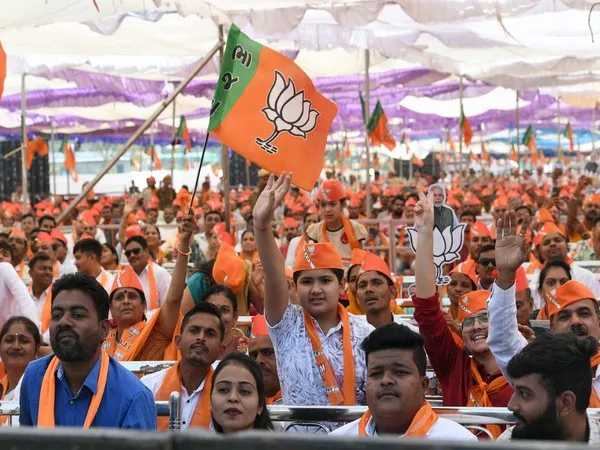
The Gujarat local body election results of 2026 have delivered a powerful political message, with the Bharatiya Janata Party (BJP) heading towards a massive and historic victory across the state. As counting trends continue to confirm the direction of results, the BJP appears set to sweep all 15 municipal corporations, marking what could be its biggest-ever win in Gujarat’s urban local governance elections. On the other hand, the Congress and the Aam Aadmi Party (AAP) are facing a major setback, struggling to gain meaningful ground in key cities and towns.
These results are significant not only because of the BJP’s scale of victory but also because local body elections reflect the mood of the public at the grassroots level. Municipal corporations, district panchayats, and taluka bodies are directly responsible for civic issues like roads, water supply, sanitation, street lighting, public transport planning, and local infrastructure. A strong win in these elections strengthens a party’s position and gives it momentum for future assembly and national elections.
BJP’s Massive Lead Across Gujarat’s Urban Map
From Ahmedabad to Surat, Vadodara to Rajkot, the BJP has emerged as the dominant force, leading in most wards and seats across the 15 municipal corporations. Early trends indicate that the party is not just winning but winning comfortably in many areas. The scale of BJP’s lead has surprised even some political observers, as it suggests that the party has managed to maintain a strong hold on Gujarat’s urban voter base.
A complete sweep of all municipal corporations would be a landmark achievement. Municipal corporations represent the most influential local governance bodies in Gujarat. They control large budgets, manage key civic projects, and play a central role in shaping urban development. Winning all 15 corporations would mean the BJP will likely have full control over the direction of major civic governance in the state.
For the BJP, this win strengthens its narrative of development and governance. For the opposition, it highlights how difficult it remains to challenge BJP’s dominance in Gujarat.
What Makes These Results Historic
Gujarat has long been considered a BJP stronghold, but local body elections are usually more unpredictable than assembly elections. Voters sometimes choose different parties for civic bodies depending on local dissatisfaction, ward-level issues, or candidate popularity. However, in 2026, the BJP appears to have turned local body elections into another statewide mandate.
If the party manages to secure the majority in all 15 municipal corporations, it would become one of the largest clean sweeps in Gujarat’s civic election history. It also reflects that BJP has been successful in connecting its state-level governance image with local development work.
Another major factor behind the party’s strong performance is its organizational structure. BJP has a deep network of workers at booth level, and local elections are heavily influenced by ground-level campaigning, voter mobilization, and candidate selection. BJP’s ability to manage these elements has given it a clear advantage.
Congress Continues to Lose Urban Ground
For the Congress, the 2026 Gujarat local body election results are another major disappointment. Once considered BJP’s main challenger in the state, Congress has struggled over the last decade to regain lost ground. These results show that the party’s urban presence remains weak and its voter base continues to shrink in key cities.
Congress candidates have reportedly been trailing in most municipal corporations, and the party has not been able to create a strong wave in its favour. Even in areas where Congress traditionally had support, the party seems unable to convert that support into a large seat count.
One major challenge for Congress has been leadership clarity and consistent organization. Local body elections require strong ward-level planning, and Congress appears to have fallen behind BJP in both preparation and execution.
If the party does not make structural changes and strengthen its local network, it may find it even harder to compete in future Gujarat elections.
AAP Struggles to Create Impact in Gujarat
The Aam Aadmi Party entered Gujarat politics with ambitious plans, hoping to replicate its Delhi and Punjab success. It positioned itself as a clean governance alternative and tried to attract urban voters. However, the Gujarat local body results indicate that AAP has not yet managed to build a strong foundation in the state.
Despite campaigning and contesting in many wards, AAP has struggled to gain leads in major municipal corporations. In some areas, its candidates have performed better than expected, but overall, the party has not achieved the breakthrough it was aiming for.
One reason could be that Gujarat voters, especially in urban areas, are still deeply aligned with BJP, and shifting that loyalty requires years of grassroots work. Another reason is that AAP is still developing local leadership and strong ward-level presence. Without experienced local candidates and strong organizational depth, civic elections become difficult.
These results are a reality check for AAP. The party may need to focus more on building a long-term structure rather than expecting immediate electoral success.
Voter Turnout and Public Mood
Voter turnout plays a major role in shaping election outcomes. In many urban municipal elections, turnout is often lower compared to state assembly elections. This year, voter participation in several cities remained moderate, with many citizens choosing not to vote due to factors like heat, lack of interest, or a belief that civic elections do not make much difference.
However, BJP’s ability to mobilize its core voter base has helped it maintain dominance even when turnout is not very high. This suggests that the party’s supporters remain highly committed, while opposition voters may have been less motivated to participate.
In rural and semi-urban areas, turnout is usually higher, and local panchayat elections often witness strong participation. BJP’s lead in these areas also reflects its expanding influence beyond major cities.
Why BJP Is Winning So Strongly
Several factors appear to be driving BJP’s strong performance in Gujarat local body elections 2026.
One of the biggest reasons is the party’s strong political identity in Gujarat. For many voters, BJP represents stability, development, and continuity. Over the years, the party has built a reputation of being well-organized and proactive in governance.
Secondly, BJP’s focus on infrastructure projects, urban development, road expansion, and industrial growth has strengthened its support among middle-class and business communities.
Third, the opposition remains divided. Congress and AAP are both contesting but neither is strong enough to create a unified challenge. In many areas, opposition votes are split, indirectly benefiting BJP.
Another major reason is BJP’s disciplined booth-level strategy. Local elections are often won by parties that can manage voter turnout effectively at the grassroots level. BJP has consistently performed well in this area.
What This Means for Gujarat’s Municipal Governance
If BJP controls all 15 municipal corporations, it will have major influence over Gujarat’s urban planning and civic development. Municipal corporations handle crucial responsibilities such as waste management, water supply, drainage, street lighting, road maintenance, public parks, and local taxation.
A single-party dominance can lead to faster project approvals and smoother coordination between municipal bodies and the state government. It may help in speeding up large infrastructure projects, smart city development, and public welfare schemes.
However, it also increases responsibility. When a party has complete control, public expectations rise. Citizens will demand improved roads, better sanitation, reduced traffic issues, cleaner water supply, and stronger public services. Any failure will directly impact the party’s reputation.
This is why the BJP’s victory, while politically significant, also comes with higher accountability.
Opposition Needs a Stronger Strategy
For both Congress and AAP, the Gujarat local body results send a clear message that they need to rebuild from the ground level. Local body elections are not just about winning seats. They are about building networks, identifying local leaders, and earning public trust.
Congress must focus on leadership development, strengthening its local units, and rebuilding voter confidence in urban Gujarat. Without a strong local presence, the party will continue to struggle.
AAP, on the other hand, must work on long-term groundwork. If it wants to become a serious challenger, it must build local leadership and focus on issues that matter to Gujarat voters rather than relying on national-level narratives.
Impact on Future Gujarat Elections
The Gujarat local body election results of 2026 are likely to influence the political atmosphere ahead of upcoming assembly and national elections. A major win boosts BJP’s confidence and strengthens its campaign narrative.
For the opposition, this defeat may lead to internal changes and strategic rethinking. Political parties often treat local body elections as a testing ground for future elections. A strong performance in civic polls can build momentum, while a poor performance can weaken public perception.
If BJP manages to translate this local body dominance into long-term governance success, it may further strengthen its grip on Gujarat politics. However, if civic issues remain unresolved, voters may reconsider their choices in future elections.
Conclusion
The Gujarat Election Result 2026 updates indicate that the BJP is heading towards a record-breaking victory in local body polls, likely sweeping all 15 municipal corporations and establishing complete dominance in urban governance. This result reflects BJP’s strong organizational structure, loyal voter base, and the continued weakness of opposition parties in the state.
Congress and AAP, despite their efforts, appear to be struggling to connect with voters and convert campaigns into electoral success. Their poor performance highlights the urgent need for stronger grassroots presence, better candidate selection, and a more focused strategy.
For Gujarat, these results will shape the future of municipal governance and urban development. A BJP sweep may bring stability and faster execution of civic projects, but it also raises expectations from the public. The coming years will reveal whether this massive mandate turns into improved civic services and better living standards for Gujarat’s citizens.